Saturday, December 29, 2007

Allvoices.com - A refreshing approach to news and events


Each day, I visit dozens of websites including blogs, news sites, forums and even social networking platforms. The purpose is keeping tabs on various technologies, events, and of course to see what else is going on around me. Whether it is political, sports, IT or even finer side of life, I prefer to find it online. And sometimes, I even write about some of it (like right now) at some forum or on one of my blogs out there…

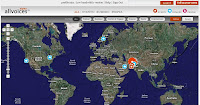
Allvoices.com is one such startup out of the valley that has caught my attention and has literally made some of my surfing easier. It not only organizes information professionally of everything that I want, but also gets my point of view out there faster.

The first thing that you see is not textual information, but a world map. As a user, you choose the region that interests you and it takes you to the news and events related to that region directly. Remarkable. For example, the story of sudden death of Benazir Bhutto spread around the world like wildfire. There was hardly any website, blog, newspaper, TV, radio that did not cover the event in detail within minutes of its happening. Even CNN listed found Benazir's death as the most sought after event on its website. Within two days of its happening, it has probably achieved the notoriety of becoming the biggest news story for 2007. But allvoices.com seems to have found a way to filter and bring the best of these stories out for its readers.

http://www.allvoices.com/people/Benazir-Bhutto

I get to read what the other newspapers are talking about, view comments left by people and also add my own blogs/feeds/comments to this list. Wonderful!

As another example, I was watching some news story on TV and a name Miliband came up in UK. I clicked on the map of UK on allvoices.com and got complete details about him, including a link to Wikipedia of his entry.

I think this is the future of how we shall gather news, read, and comment. It is a mix of traditional (imported news items from major players including fox, cnn, bbc etc) with a blend of blogs and viewers comments. CNN is trying to do something similar with iReport, but so far allvoices.com seems a better effort. Good job guys.

Tuesday, December 18, 2007

Successful Strategy

Good strategy is the key to success of any enterprise. Failing to create or execute one could mean disaster, regardless of the size of the company or the qualifications of the people leading it.

Tips to Formulating a Good Strategy

  • Primary Focus: A well formed question as to what is the strategy of the company. For example, how do we expand nation-wide in the next 6 months? How do we increase our revenue by 30% in the next year? How do we make our new product number 1 in the market by 2009?
  • Understanding Current Situation: One must know what is going on around the enterprise. For example, know what the competitors are doing. Are there any new players in the market. Has anyone become more aggressive in the market? Where the market is heading. Is it moving to on line purchases from stores? Is it slowing down as compared to last year? Customers. Are they satisfied with the services or are considering choosing others.
  • Timeline and Targets: Must be clear of what you want to achieve in which steps in a fixed amount of time. There is no point in having an open ended strategy with no targets. Every target and strategy should be absolutely time bound. The goals should clearly be defined. For example, that the six billboards for our new product shall be up in the city by the end of February 2008. Similarly, the new product release shall hit the shelves of retailers before the Christmas shopping season begins.
  • Understanding the Future: Must know where the market, customers, suppliers (and other critical factors like economy, political scenario etc) will be when the strategy is executed successfully. Say, if we are going to launch a new desktop software in 2 years that is slated to capture a niche market. But will the penetration of Internet based products eliminate the desktop software market? Would Google or Microsoft also get into this market with their cheap or free web based products? Will the political instability cause an economic shakeup?
  • Measuring the Performance: Must gouge and measure your strategy every step of the way. For example, have the revenues increased significantly in the past two quarters to show that we shall achieve the targets by the end of the year? Is the product development meeting the milestones on schedule so that we can achieve our target of launching the new release by Christmas?

Factors to failure

  • Lack of Communications within the team: Communications within the various departments in the enterprise. One of the most common reasons for failure in strategy is breakdown in communications and not sharing and seeking critical information from each other.
  • Being reactive rather than proactive: Spending too much time in firefighting, resolving issues, following up on opportunities and not allocating and spending time on strategic thinking.
  • Thinking short term, rather than long term: Most of the time, we think of a few months ahead and not worry about where we will be in the long term. Short term is usually reactive, focuses on doing and is customer driven. The long term is where you want to see your company and what you would like to achieve by that time. It also sets a clear direction and vision for the company.

Monday, September 03, 2007

See a Problem, Seek a Solution

I was taking this class one time at my University which had an elderly gentleman as the guest speaker for the day. The subject under study was the first things any startup would do to get things going. For some reason, the professor decided to ask me a few pointed questions right from the get go which I had to answer right away. Among those many questions, he was trying to inquire what would one do at the start of the setting up their organization. Naturally, I responded, as any business major would do with buzz words like, visions and mission statements, the goals the objectives and yada yada yada. And the professor would studiously jot all my points down on the white board asking the whole class to comment and add. Everyone started contributing and building on what I was saying. Suddenly, the guest speaker stopped us all. He went to the board, and crossed out everything that was written and looked back at us all with a stern look and said,

“This is not what you do. This is not how you start off with. You are all wrong!”

Everyone, including me were taken aback and had confounded looks on our faces. You could hear the pin drop in the room. Is this not what we are taught day in day out? What does he mean?

“You see a problem, and you try to find a solution to that problem. That is how you start. And that is how you build your company. These visions and missions come later, way later.” he replied in a quiet and gentle manner.

That elderly guest speaker was no other than, Andy Grove, the co-founder and ex CEO of Intel Corporation.

“When we started Intel, we had seen a problem. We worked towards finding a solution to our problem and we built our company around it. That is how successful companies get built and run.” he added while gazing at our empty and confused faces.

He was so right. I began to think back. In 2002, when I co-founded BrightSpyre, it was based on a problem that we had seen. There were no websites for job advertisements in Pakistan. We built our company around solving that problem and later that idea spawned a whole industry in the country. Today, five years later, a new job portal gets launched every few months in the country.

Moral of the story. Find a problem, something that needs a solution. Once you have identified it, then build your business around it. And you shall see your ideas will have better mileage than blindly following someone who spends lots of time on documents, business plans and presentations. These things are important and will definitely be required at some later stage. But during startup, they are not as helpful.

Sunday, June 10, 2007

Positive Energy

Always bring a positive attitude towards work. Always smile even in adverse conditions. It is better not to say anything than to say something bad. Thinking negatively contributes very little to the organization. If you are a manager with a negative outlook, you are more likely to cause your team to slide downwards.

Always contribute positively

If you are given a task to do, give your 200% and nothing less. Take every task, no matter how trivial, as a challenge and accomplish it to the best of your abilities. If you lack in some area, always seek guidance from your peers and superiors. But never say never.


Be Proactive

Never wait for your supervisor to ask you on follow ups of the already assigned tasks. Never give them a chance to run after you and pester you for results and updates. Get reports in early and have your communication channel open, and keeping them abreast of all updates on the project and tasks assigned. Do not procrastinate on tasks and work.


Fix issues do not just point them out

Whenever an issue arises, try to find a solution or work towards one. There is no point in pointing out lots of problems and excuses for something that has gone wrong. It is very easy to point out issues, problems and mistakes within an organization, but very difficult to suggest solutions. The best of the lot are those who have suggestions and solutions to issues. If someone continues to point out issues, he/she will soon be branded a “whiner” within the organization. Also, the management will never consider that person for leadership role as he/she is more likely to fail.

Small minds find excuses. Great minds find solutions.